
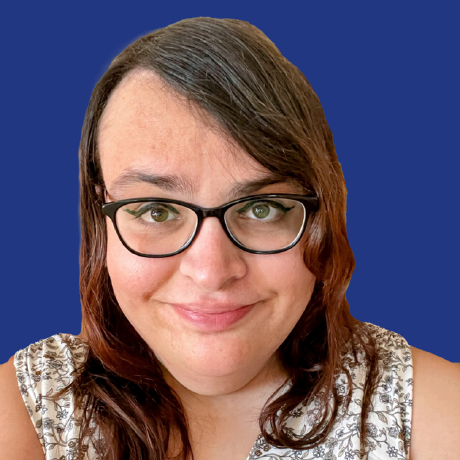




Senior Director of Engineering. I lead teams, write code, and build public-interest software.
At Coforma, I lead a 23-person engineering structure with six direct reports, including engineering managers and directors, and own the company-wide healthcare engineering portfolio. I also stay hands-on as engineering lead and principal engineer for MyCareer.NJ.gov, a statewide workforce platform available in English and Spanish and used by about 1.7 million New Jersey residents. I am not bilingual; the language options describe the service and reviewed translation work. I stay close to architecture, accessibility, reliability, and the people doing the work.
I've spent the last decade building civic technology. Much of that work is unglamorous but important: turning policy into software, fixing messy data, making public services accessible, and keeping them secure and reliable. I also work on open data standards, including CTDL for workforce credentials and FHIR for health data.
Before Coforma, I built public systems inside California government at the Department of Social Services, Energy Commission, and Public Utilities Commission, and led application development at UC Berkeley.
Based in Davis, California · Portfolio · LinkedIn
Most projects here are betas or reference implementations. They are not proof of production use or adoption. Each README says what works, what does not, and what still needs human review.
- Transit Delivery Atlas. A close, source-linked reading of California Executive Order N-7-26. The signed order, my analysis, and unanswered questions are kept separate across 21 directive records. It is independent public research, not an official implementation or compliance dashboard, and missing evidence does not show that work did not occur. Explore the atlas.
- GTFS Scorecard. Live beta quality scorecards for 1,100+ public GTFS feeds, drawn from a curated registry of 1,600+ feed records concentrated in the United States and Canada with reviewed cohorts across Europe, Asia-Pacific, and South America. Feed records are not necessarily distinct agencies. It prioritizes rider-facing fixes, scores realtime only when a usable feed is configured, and publishes a read API, GitHub Action, and read-only MCP server. Visit gtfsscorecard.org.
- tods-validate. A beta TODS 1.0 and 2.1 validator for CLI, GitHub Actions, pre-commit, browser, Docker, and language-server workflows. It applies conservative auto-fixes and detects TODS references broken by GTFS changes. Some semantic checks use 2.1-only mechanisms and are skipped with disclosure for 1.0; the VS Code client is not published to a marketplace. It also includes a merged upstream standards correction.
- Fare Policy Assistant. A reduced-fare beta reference assistant for five California transit agencies. It answers from dated sources and refuses eligibility decisions and personal information. The repo includes a public 201-case white-box benchmark and a separate black-box audit, including missed representational, refusal, multilingual, and groundedness thresholds. Manual accessibility review and judge calibration remain open. Review the evaluation surface.
- NearMiss. A beta road-safety toolkit and public FARS evidence atlas. The live atlas presents reviewed 2020–2024 NHTSA fatal-crash counts for all 50 states and D.C., labeled as burden rather than exposure-normalized risk. Separate local workflows use synthetic reports to demonstrate privacy-preserving intake, exposure normalization, uncertainty intervals, and hotspot analysis. Manual screen-reader review remains pending. Explore the atlas.
- Sprout. An in-build, offline-first plant-care reference assistant whose evaluation harness is the headline artifact. It measures groundedness, toxicity safety, calibrated uncertainty, and English/Spanish parity; the deterministic public reference answers only from a versioned, cited corpus and runs locally in the browser.
- constituent-reconciler. An offline-first nonprofit record-resolution pipeline with OCR, probabilistic matching, consent-aware exports, and a human review gate so uncertain records never merge silently.
- outcome-receipts. Draft funder reports where every figure carries its SQL, row count, data-slice hash, definition, and timestamp. Its offline default refuses ungrounded numbers, requires named human approval, and emits verifiable bundles. The included small-cell suppression settings are an example policy, not a compliance determination.
- habitable. A working alpha reference implementation for tenant unions to keep encrypted habitability records with RFC 3161 timestamps, chain of custody, peer-to-peer sync, an English and Spanish local web app, and independently verifiable packets. There is no central store of tenants' personal data. It has not had an independent security or legal review or a real tenant-union pilot, so do not rely on it in a real legal matter yet.
- ledger. A private community archive for queer history and mutual-aid knowledge. It uses established preservation formats, revocable consent, and synthetic identity-leak tests. It has not had an independent security or cryptography audit and should not yet hold high-stakes records.
- Swelter. A maintained reference implementation for neighborhood heat and air-quality sensing. Its English and Spanish dashboard shows daily Copernicus model data for 337 California cities and provisional readings from physical, uncalibrated low-cost sensors in Stuttgart. The pipeline keeps raw and calibrated values separate and exports OGC SensorThings data. It is not an established community sensing network, and manual accessibility review remains a separate gate.
- Davis Bike Hazard Map. A private-beta, offline-first cycling-hazard PWA with privacy-preserving photo intake, safer routing, saved-route alerts, moderation, and handoff to the city's 311 system.
- Family Greenhouse. A React and TypeScript household plant-care PWA with Capacitor mobile shells and a serverless AWS backend. Commercial activity is on hold: it remains a technical demonstration and is not accepting new registrations or payments, offering paid plans, conducting launch activity, or doing customer outreach.
- Personal tools that keep their data local: Olive Bark Logger and Queer the Stacks.
- This site: chelseakr.com offers an English interface and a Spanish translation. I am not bilingual. Accessibility checks run in CI, while manual assistive-technology review and external conformance review remain separate human gates.
There is also a TODS fork I use for upstream standards work. Browse every public repository.
- I won't work on weapons or warfare, policing or mass surveillance, or technology that profits from incarceration. I also won't work with organizations based in, or strongly tied to, Israel.
- I look for organizations whose work helps people routinely failed by public systems, and whose leadership reflects the communities they serve.
- I won't use AI to decide whether someone gets a job, benefit, service, or opportunity. It can help a person make a decision, but that person should be able to see the evidence, correct bad information, and make the final call.
- I collect as little personal data as I can. I prefer local and offline tools when they are practical, and I want people to choose what they share.
- I show sources, calculations, and my own interpretation separately. When a system does not know something, it should say so.
I spend most days in Python, TypeScript, React, AWS, and data systems. I like clear boundaries, useful logs, known-answer tests, and checks that stop when they cannot prove the result. Privacy, accessibility, and operations are part of the first design, not a cleanup pass.
AI agents are part of my development workflow. I choose the architecture, write the acceptance criteria, review the output, and decide whether it is ready to release. Legal, policy, subject-matter, and manual accessibility reviews are done by people.
I'm interested in W-2 engineering people-management roles—VP, Head of Engineering, Director, or Senior/Principal Engineering Manager—where I can lead people and managers, stay close to the architecture, and build reliable, accessible public-interest technology. My strongest domains are energy and utilities, public health, workforce systems, social services, and responsible AI.
Reach me through chelseakr.com or LinkedIn.
My portfolio repositories are developed against a shared set of engineering standards. This repository is documentation only — a profile README — so most of those standards do not apply here; they apply (and are declared) in the individual project repositories linked above.
| Standard | Status |
|---|---|
| Responsible-Tech Framework | Applies — the "What I will and won't work on" section above is the load-bearing statement; claims about projects are kept honest and dated |
| Code Quality | N/A — README-only profile repository; no executable source or dependency graph |
| Security & Supply-Chain | N/A — README-only profile repository; no executable or deployable supply-chain surface (reporting channel in SECURITY.md) |
| CI/CD | N/A — GitHub-rendered profile README; no build, deployment, or versioned artifact |
| Observability | N/A — no runtime service or application surface |
| Accessibility | N/A — no owned HTML surface; content is rendered by GitHub |
| Internationalization | N/A — personal profile content, not a civic/public-service user workflow (see docs/I18N.md) |
| AI Evaluation | N/A — no LLM/model component |
| Documentation | Applies — this README, CHANGELOG.md, SECURITY.md, and the ADR log in docs/adr/ |
| Quality & Metrics | N/A — no executable product or service metrics |
| Release & Versioning | N/A — no versioned artifact is released from the profile repository (see ADR 0001) |
CITATION.cff — N/A (profile README; nothing citable). Prose checks run via make verify
(markdownlint) and the matching pre-commit hook.